|
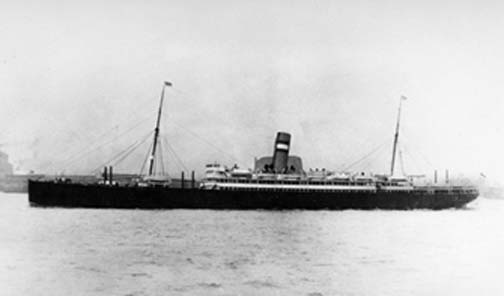 |
| The Noordam |
| Our Ship to America |
| Family on board |
| Franciszka (Francis) Kaczmarek (mother, age 33) |
| Marta (Martha) Kaczmarek (daughter, age 8) |
| Regina (Virginia) Kaczmarek (daughter, age 3) |
|
|
|
Port of Departure: Rotterdam, South Holland, The Netherlands. |
| Port of Arrival: Ellis Island, New York, New York, U.S.A. |
| Date of Arrival: August 27, 1912. |
|
|
|
Ship Data: Built by Harlan & Wolff Limited, Belfast, Northern Ireland, in 1902. Displacement: 12,531 gross tons. |
| Length: 575 feet. Width: 62 feet. Engines: triple steam expansion, twin screw. Speed: 15 knots. Passenger |
| capacity: 2,278 (286 first class, 192 second class, 1,800 third class). |
|
|
| Ship History: Built for the Holland-America Line, the ship was christened Noordam and, under Dutch flag, placed into |
| Rotterdam-New York service. In 1922, Swedish American Line chartered it, renamed it Kungsholm, and placed it into |
| Gothenburg-New York service. In 1924, returning to Holland-America Line, it reverted to the Noordam and sailed under |
| Dutch flag between Rotterdam and New York. It was pulled from service in 1927 and scrapped in Holland in 1928. |
|
|
| Family Lore: In the fall of 1982, Virginia (Kaczmarek) Plummer traveled with her nephew, Ron, by automobile from |
| Stuttgart, Germany, to Bremerhaven, on the North Sea. Arriving at the Bremerhaven city center, Virginia suddenly |
| shouted, "Stop the car!" Parked at the edge of the road, she began to reminisce. "I stood on this very spot in 1912," |
| she said, "holding my Mother's hand. Your Aunt Martha stood on the other side, holding the other. We had arrived |
| by train from Warsaw and were waiting for a taxi to the harbor and our ship to America. I remember staring at that red |
| brick building across the road, but it looked different then." Fifty yards away stood the main railway station, a tall |
| square structure with one-story wings on either side. "I don't think those wings were there when we traveled through |
| here," she said. Sure enough, upon closer inspection, the bricks in the two wings were of a different size and pattern |
| than those in the central portion -- obviously having been added sometime after 1912. Aunt Virginia continued her |
| narrative: "I don't recall much from the voyage across the Atlantic, except that all three of us slept in one large web |
| hammock, far below decks in third-class steerage; and we had to bring our own food -- enough for the entire week or |
| so we were on the open sea. At the port of New York, we transferred to a train en route to Chicago where Father |
| waited to greet us. Porters on the train sold sandwiches and fruit, and Mother saw a banana for the first time in her |
| life. On an impulse, she bought one and bit into it. It tasted so bitter that she threw it away, unaware that one peeled |
| away the skin first, exposing the fruit inside. Later, walking the streets of Chicago, she saw a man eating a banana |
| and realized her mistake. We had little money, and it aggravated her to realize that she had discarded a perfectly |
| eatable piece of food. Over time, the banana became her favorite fruit, as she ate one almost daily for the remainder |
| of her life; and, every time she peeled a banana, she lamented having once thrown one away." |
|
|